Pearls of Rashi: Parshas Terumah

Click here for a printable version.

In this week’s Torah portion, Terumah, Hashem commands us to build the Mishkan. To do so we needed to bring acacia wood.

Rashi cites the words from the verse “and acacia wood” and explains, “Where did they get these (trees) in the desert? Rabbi Tanchumah explained that our father Yaakov foresaw with a prophecy that the Jews were destined to build a Mishkan in the Wilderness, so he brought cedars to Egypt and planted them. He commanded his descendants to take the trees with them when they left Egypt.”

Why did Yaakov start preparing for this over 200 years before it was time to build the Mishkan? Furthermore, why did we we needed to bring trees from Israel and replant them in Egypt?

Rashi answers this question by telling us that “Rabbi Tanchumah explained.” The name “Tanchumah” is from the Hebrew word “nechomoh,” meaning consolation. The Jews knew that G-d had promised to redeem us. However, throughout all of the years of slavery, we could look at actual physical cedars that were brought from Israel (conveying the idea of redemption) and be comforted from our suffering by seeing a real, concrete sign of redemption.

The teaching of Rabbi Tanchumah is not only a consolation for the Egyptian exile. Rather it is to comfort us in all of our exiles, including our prolonged present exile. The Midrash teaches us that exile is comparable to our wandering in the wilderness of the nations. The purpose of our wandering was in order to build a sanctuary in the wilderness. We were to take a barren wasteland, a place void of holiness, a place of[1] “snakes, vipers, scorpions, and thirst …” and to build a sanctuary there.  We are to build a Mishkan and a Sanctuary to Hashem, a dwelling place for Him in the lowest of all places.  After this work, we will be able to fulfill the commandment[2] “They shall make a sanctuary for me, and I will dwell among them” in the purest sense of the word. We will build the third Bais Hamikdosh, in which Hashem will reveal the original Mishkan built by Moshe. Our ability to accomplish this, and to break through the darkness of exile is a result of Yaakov bringing the cedars from Israel.

I wish one and all a good Shabbos!

Rabbi Shmuel Mendelsohn

Adapted from Likkutei Sichos 31, Page 146ff.


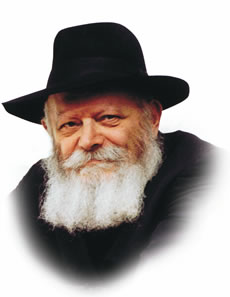
DEDICATED IN HONOR OF THE LUBAVITCHER REBBE
מוקדש לזכות כ”ק אדמו”ר נשיא דורנו מליובאוויטש


IN LOVING MEMORY OF
Mrs. Chana (Ann) bas Reb Shmuel ע “ה Mendelsohn
Passed away on 7 Adar II, 5752
May Her Soul be bound in the Eternal Bond of Life
לעילוי נשמת
מרת חנה בת ר’ שמואל ע”ה מענדלסאהן
נפטרה ביום ז’ אדר שני, ה’תשנ”ב
ת. נ. צ. ב. ה.


IN HONOR OF
The Soldiers of Tzivos Hashem Chaim and Aiden Oded שיחיו Morris
DEDICATED BY THEIR PARENTS
Rabbi & Mrs. Menachem M. and Chaya Mushka שיחיו Morris
לזכות
חיילי “צבאות השם” חיים ועדן עודד שיחיו מאריס
נדפס ע”י הוריהם
הרה”ת ר’ מנחם מענדל וזוגתו מרת חי’ מושקא שיחיו מאריס


[1]. Devorim 8:15.

[2]. Our Parshah, Shemos 25:8.
Perlas de Rashi: Parshas Mishpotim

Click aquí para una version imprimible.

Esta semana leemos Parshas Mishpatim. La palabra Mishpatim se refiere a los Mitzvos racionales, i.e., aquellos Mitzvos los cuales una persona puede captar intelectualmente[1]. Muchos de estos mandatos Divinos estan dirigidos a la interacción entre dos individuos. Aquí la Torah discute sobre varias leyes con relación a los daños de propiedad.

Un ejemplo de esto es[2] “Cuando un buey matare a un hombre o una mujer de una cornada, será apedreado aquel buey, y su carne no será comida…”. ¿Acaso esta ley solo aplica, a un buey? Rashi cita las palabras “de una cornada”, y explica que “(esta ley se refiere) a cualquier animal doméstico, bestia o ave; sin embargo, la Torah habla del caso usual.”

Hay varias ocasiones en esta parasha en las que Rashi nos dice la regla que “la Torah habal del caso usual[3].” Como todo en la Torah, esta regla general tiene una significancia espiritual más profunda.

Hay ocasiones donde algo sobrenatural ocurre; un evento que no va con las leyes de la naturaleza; un ejemplo de esto es la apertura del mar. Este tipo de evento muestra a todos claramente que esto no pasa, Di-s no permita, por coincidencia. En vez de ello, obviamente[4] “De Hashem ha sido todo esto; es maravilloso a nuestros ojos.”

No obstante, más a menudo, el mundo sigue su orden natural; las cosas parecen (jas v’shalom) funcionar por sí solas. Todos los eventos parecen seguir su orden natural, a esto nos referimos al decir que “la Torah habla de lo que usualmente ocurre.”

Aun cuando los eventos que experimentaos o vemos parecen seguir su orden natural, empero, todo es porque “la Torah habla”, nada pasa por sí solo. Todo lo que ocurre, pasa por providencia Divina.

Debemos internalizar esta lección. Todos debemos aprender a mirar el mundo a traves de los ojos (perspectiva) de la Torah. De esta manera, nos damos cuenta que Hashem siempre está presente para ayudarnos.

Les deseamos un tranquilo y, significativo ¡Shabbos!

Rabbi Shmuel Mendelsohn

Rabbi Yochanan Salazar Loewe – traductor

Adaptado de Likutei Sijos Volumen 6, Pag. 141ff.


DEDICADO EN HONOR DEL LUBAVITCHER REBBE
מוקדש לזכות כ”ק אדמו”ר נשיא דורנו מליובאוויטש


EN HONOR DE
Los Soldados de Tzivos Hashem Chaim y Aiden Oded שיחיו Morris
DEDICADO POR SUS PADRES
Rabbi & Sra. Menachem M. y Chaya Mushka שיחיו Morris


לזכות
חיילי “צבאות השם” חיים ועדן עודד שיחיו מאריס
נדפס ע”י הוריהם
הרה”ת ר’ מנחם מענדל וזוגתו מרת חי’ מושקא שיחיו מאריס


[1]. Todos los Mitzvos son la voluntad de Hashem. Por ende, cada Mitzva tiene cierta profundidad que el humano no puede captar; sin embargo, en cierto nivel estos Mitzvos son racionales.

[2]. Este Parsha, Shemos 21:28.

[3] Ver Parsha Shemos 22:17, Ibid, ibid. 21, and Ibid, ibid. 30.

[4]. Tehilim, 118:23.

Pearls of Rashi: Parshas Mishpotim & Shekolim

Click here for a printable version.

In addition to our regular weekly Torah reading, Mishpotim, we read a different portion this week, Shekolim. It tells of the yearly half-shekel which had to be given by all Jews.

The Torah says that[1]this they shall give … a half shekel according to the holy Shekel.” The Parshah teaches us that this half-shekel provides a Jew with[2] “an atonement for his soul.” Rashi cites the words “this they shall give” and explains as follows. “He (Hashem) showed him (Moshe) a sort of coin of fire weighing half a shekel, and He said to him, ‘Like this one they shall give.’”

Rashi explains that Hashem showed something to Moshe because the Torah uses the word this; “this they shall give.” The term this always refers to that at which one can point.

However, why does he need to write that G-d showed Moshe a coin of fire? Why did He not show Moshe a simple silver coin? This does not seem to fit with Peshat, the simple meaning of the verse.

The explanation is that Moshe was shocked when Hashem told him that by giving a half shekel, one could attain “atonement for his soul.”

We can explain this with an analogy. A young man desired to become a goldsmith. He went to an experienced smith to learn this trade. The teacher was clear, and in a short time, his student learned the trade. There was just one thing that the teacher did not mention. He assumed that the student would understand that he must first light a fire under the silver or gold for his work to have any effect. When the student returned home to practice his trade, he did as he learned. The one thing which he did not do, was to light a fire under the raw material. We can understand that his work was in vain; it did not change the metal at all.

The above is why Hashem showed Moshe a coin of fire. One cannot attain “atonement for his soul” by paying money. It is only when he “lights a fire” under it that it has any effect. He must give it with the excitement which comes from the essence of his soul. Only then can it serve as atonement.

We must all learn from this that every Mitzvah we fulfill, and all of the Torah we study, must come from our hearts’ depths. Then, we will bring Moshiach now!

I wish one and all a good Shabbos and a good month!

Rabbi Shmuel Mendelsohn

Adapted from Likkutei Sichos Volume 3, Page 529


DEDICATED IN HONOR OF THE LUBAVITCHER REBBE
מוקדש לזכות כ”ק אדמו”ר נשיא דורנו מליובאוויטש

IN HONOR OF
The Soldiers of Tzivos Hashem Chaim and Aiden Oded שיחיו Morris
DEDICATED BY THEIR PARENTS
Rabbi & Mrs. Menachem M. and Chaya Mushka שיחיו Morris

לזכות
חיילי “צבאות השם” חיים ועדן עודד שיחיו מאריס
נדפס ע”י הוריהם
הרה”ת ר’ מנחם מענדל וזוגתו מרת חי’ מושקא שיחיו מאריס


[1]. Our Parshah, Shemos 30:13.

[2]. Our Parshah, Shemos 30:12.

Pearls of Rashi: Parshas Mishpotim

Click here for a printable version.

This week we read Parshas Mishpotim. The word Mishpotim refers to rational Mitzvos, i.e., those Mitzvos which a person can intellectually grasp[1]. Many of these Divine commands relate to the interaction between two people. Here the Torah discusses many of the laws regarding damages.

One such example is[2] “If a bull gores a man or a woman and (they) die, the bull shall surely be stoned, and its flesh shall not be eaten…” Does this law apply only to a bull? Rashi cites the words “if a bull gores,” and explains that “(This law refers to) either a bull or any domestic animal, beast, or bird. However, the Torah spoke of what usually occurs.”

There are several instances in this Torah Portion that Rashi tells us the rule that “the Torah speaks of what usually occurs[3].” Like everything in the Torah, this general rule has a more profound spiritual significance.

There are times when something supernatural takes place; an event that does not conform with nature’s laws. An example of this is the splitting of the sea. Such an event makes it clear to one and all that it does not, G-d forbid, happen by coincidence. Instead, obviously[4] “This was from Hashem; it is wondrous in our eyes.”

However, more often than not, the world follows its natural order. Things appear (Chas Veshalom) to be taking care of themselves. All events seem to be following the laws of nature. This is when we say that “the Torah speaks of what usually occurs.”

Even though the events we witness are what usually occurs, nonetheless, it is all because “the Torah speaks.” Nothing ever happens on its own. Everything that takes place happens by Divine Providence.

We must take this lesson to heart. All of us must learn to view the world through the Torah’s lenses. In that way, we will realize that Hashem is always here to help us.

I wish you a peaceful, meaningful Shabbos!

Rabbi Shmuel Mendelsohn

Adapted from Likkutei Sichos Volume 6, Page 141ff.


DEDICATED IN HONOR OF THE LUBAVITCHER REBBE
מוקדש לזכות כ”ק אדמו”ר נשיא דורנו מליובאוויטש

IN HONOR OF
The Soldiers of Tzivos Hashem Chaim and Aiden Oded שיחיו Morris
DEDICATED BY THEIR PARENTS
Rabbi & Mrs. Menachem M. and Chaya Mushka שיחיו Morris

לזכות
חיילי “צבאות השם” חיים ועדן עודד שיחיו מאריס
נדפס ע”י הוריהם
הרה”ת ר’ מנחם מענדל וזוגתו מרת חי’ מושקא שיחיו מאריס


[1]. All Mitzvos are Hashem’s will. Hence, each Mitzvoh has a depth which human intellect cannot grasp. However, on a certain level these Mitzvos are rational.

[2]. Our Parshah, Shemos 21:28.

[3] See our Parshah Shemos 22:17, Ibid, ibid. 21, and Ibid, ibid. 30.

[4]. Tehillim, 118:23.

Perlas de Rashi: Parshas Yisro I

Click aquí para una version imprimible.

La Parasha de esta semana, Yisro, nos dice como el suegro de Moshe rabeinu llego a aceptar a Hashem. El declaro que[1] “Ahora sé que Hashem es más grande que todos los dioses, pues aquello en lo que se ensoberbecieron, recayó sobre ellos mismos”.

¿Qué quiere decir esto? Rashi cita las palabras: “pues aquello en lo que se ensoberbecieron, (ÉL- hizo que) recayera sobre ellos”, y explica que esto puede ser entendido de “acuerdo a su traducción (Aramea). Ellos planearon destruir a los judíos con agua y fueron (ellos) destruidos con agua[2].”

Hubo muchos Milagros en el proceso de la liberación de los judíos de Egipto. Sin embargo, el milagro que obligo a Yisro a reconocer que ahora sabe que Hashem es el más grande de todas las deidades fue, el que los egipcios se ahogaran en el mar. ¿Por qué fue más convincente este milagro, que las otras maravillas y prodigios que Hashem mostro sobre los egipcios?

Podremos entender esto basado en las palabras del Rambam[3]. Los primeros idolatras no negaron, jas v’shalom, la existencia del Todopoderoso. En vez de ello, ellos creían que Hashem otorgo poder a las fuerzas de la naturaleza para gobernar sobre la creación. Es por ello que adoraban a las fuerzas de la naturaleza, i.e. las estrellas, las constelaciones. Empero, ellos ciertamente creían que Hashem regia sobre estas fuerzas; Él era quien les dio el poder.

Si la destrucción de Egipto hubiese venido a traves de otro medio que no fuese el agua, hubiese sido posible pensar, jalila, que el agua podía destruir al pueblo judio, y que Hashem simplemente se sobrepuso al agua atraves de otra fuerza de la naturaleza (el viento). El hecho que Hashem los castigo con el mismo medio con el cual buscaron destruir a Israel demostró que solamente Él reina, sobre todo, solo Él tiene el poder. La naturaleza es solamente una herramienta que El usa para gobernar el mundo.

Puede ser que a veces nosotros nos sentimos en control. Debemos aprender de este episodio que, solo Hashem está en control de todo.

Les deseamos un ¡Shabbat significativo!

Rabbi Shmuel Mendelsohn

Rabbi Yochanan Salazar Loewe- traductor

Adaptado de Likutei Sijos Volumen 16, Pag. 200.


DEDICADO EN HONOR DEL LUBAVITCHER REBBE
מוקדש לזכות כ”ק אדמו”ר נשיא דורנו מליובאוויטש


EN HONOR DE
Los Soldados de Tzivos Hashem Chaim y Aiden Oded שיחיו Morris
DEDICADO POR SUS PADRES
Rabbi & Sra. Menachem M. y Chaya Mushka שיחיו Morris


לזכות
חיילי “צבאות השם” חיים ועדן עודד שיחיו מאריס
נדפס ע”י הוריהם
הרה”ת ר’ מנחם מענדל וזוגתו מרת חי’ מושקא שיחיו מאריס


[1]. Esta Parshah, Shemos 18:11.

[2]. Los egipcios planearon destruir a los judíos tirando a sus hijos al Nilo. Hashem los destruyo a ellos al tirarlos al agua, es decir ahogándolos en el mar.

[3]. Leyes de idolatría, cap.1, párrafo 1.

Pearls of Rashi: Parshas Yisro II

Click here for a printable version.

Our Torah portion, Yisro, tells of the historical moment of the giving of the Torah. Before receiving the Torah, the Jewish Nation camped opposite Mount Sinai. The Torah says that[1] “Yisroel (meaning the Jewish Nation) encamped there.” However, it uses the Hebrew word for encamped in the singular form rather than the plural. It does not say “they camped,” as is generally the case. Instead, the Torah uses the word which means that “he (singular) camped.” Rashi explains that the reason for this is because the Jews camped “as one man with one heart. However, all of the other encampments were with complaints and strife.”

This world is called a “public domain[2].” In the public domain, the street, we see many different, unrelated things[3]. We see this especially in the realm of human beings. Our Sages tell us[4] that “no one person is comparable to another.” Each person is involved in activities that are not at all comparable to those of his fellow. Many people are engaged in activities that contradict those of their fellow. This being the case, how is it possible for the Jews to be “as one man with one heart?”

Rashi explains that they were like one man, and thus it says that “Yisroel (he) camped.” Why were the Jews like one man? The reason is that they were Yisroel; each had a G-dly soul. The entire Jewish Nation is one large, united entity. Because we were as one man, we were also of one heart. There are differences between one Jew and another when it comes to studying the Torah. However, when it comes to receiving the Torah, all Jews have one heart.

The way to unite the world is through revealing the truly one G-d. He transcends the limitations of the world. How can His presence be shown here? It can only happen through something above the world’s boundaries, namely Torah and the Jewish Nation.

This is what Rashi is teaching us. As the Jews prepared to receive the Torah, they became one person. We achieve this through the “spark,” the essence of the Jewish soul, which genuinely makes the Jews “as one person with one heart.”

I pray that this Shabbos we all receive the Torah together, as one man with one heart. I wish you all a wonderful Shabbos!

Rabbi Shmuel Mendelsohn

Adapted from Likkutei Sichos Volume 21, Page 100ff.


DEDICATED IN HONOR OF THE LUBAVITCHER REBBE
מוקדש לזכות כ”ק אדמו”ר נשיא דורנו מליובאוויטש

IN HONOR OF
The Soldiers of Tzivos Hashem Chaim and Aiden Oded שיחיו Morris
DEDICATED BY THEIR PARENTS
Rabbi & Mrs. Menachem M. and Chaya Mushka שיחיו Morris

לזכות
חיילי “צבאות השם” חיים ועדן עודד שיחיו מאריס
נדפס ע”י הוריהם
הרה”ת ר’ מנחם מענדל וזוגתו מרת חי’ מושקא שיחיו מאריס


[1]. Our Parshah, Shemos 19:22.

[2]. See Tanya, at the end of Chapter 33.

[3]. See Likkutei Sichos, Volume 15, Page 47.

[4]. See Talmud Sanhedrin, 37, a.

Pearls of Rashi: Parshas Yisro I

Click here for a printable version.

This week’s Parshah, Yisro, tells us how Moshe Rabbeinu’s father-in-law came to recognize Hashem. He declared that[1] “Now I know that Hashem is greater than all the deities, for with the thing that they plotted, (He came) upon them.”

What does this mean? Rashi cites the words “for with the thing that they plotted, (He came) upon them,” and explains that this can be understood “according to its (Aramaic) translation. They planned to destroy the Jews with water, and they were destroyed with water[2].”

There were countless miracles involved in delivering the Jews from Egypt. However, the one miraculous event which brought Yisro to declare that he now knows that Hashem is more significant than all deities was the drowning of the Egyptians in the sea. Why was this miracle more compelling than any of the other wonders which Hashem brought upon the Egyptians?

We can understand this based on Rambam’s words[3]. The first idol worshippers did not Chas Veshalom deny the existence of the Almighty. Instead, they believed that Hashem gave power to the forces of nature to control the world. That is why they worshipped natural forces, i.e., the stars and the constellations. However, they certainly believed that Hashem commanded these forces; He was the one Who gave them their power.

Had Egypt’s destruction come through anything but water, it would have Chalilah been possible to think that the water was able to destroy the Jews. Hashem merely overpowered the water through a different force of nature. The fact that Hashem punished them through the same means they sought to destroy Israel demonstrated that He alone is in charge. Nature is merely His tool in controlling the world.

At times we feel that we are in charge. We must learn from this that G-d alone is in control of everything.

I wish you a meaningful Shabbos!

Rabbi Shmuel Mendelsohn

Adapted from Likkutei Sichos Volume 16, Page 200ff.


DEDICATED IN HONOR OF THE LUBAVITCHER REBBE
מוקדש לזכות כ”ק אדמו”ר נשיא דורנו מליובאוויטש

IN HONOR OF
The Soldiers of Tzivos Hashem Chaim and Aiden Oded שיחיו Morris
DEDICATED BY THEIR PARENTS
Rabbi & Mrs. Menachem M. and Chaya Mushka שיחיו Morris

לזכות
חיילי “צבאות השם” חיים ועדן עודד שיחיו מאריס
נדפס ע”י הוריהם
הרה”ת ר’ מנחם מענדל וזוגתו מרת חי’ מושקא שיחיו מאריס


[1]. Our Parshah, Shemos 18:11.

[2]. The Egyptians planned to kill the Jews by throwing their babies into the Nile. Hashem destroyed them with water, meaning by drowning them in the sea.

[3]. The Laws of Idolatry, Chapter 1, Paragraph 1.

Pearls of Rashi: Parshas Beshalach II

Click here for a printable version.

This week we read Parshas Beshalach. It tells us of the Manna – Mon, which was food from heaven. This was the Jewish nation’s diet throughout the forty years in the desert.

Every day each Jew would find his allotted amount of manna, neither more nor less. Every Jew would receive the exact amount he needed.

The only exception to this was Shabbos. Every Friday, the Jews received a double portion of Mon, enough for Friday and Shabbos[1]. The Torah describes this as follows. Moshe told the Jews that[2] “See that Hashem has given you the Shabbos. Therefore, on the sixth day (Friday), He gives you (enough) Mon for two days. Each person should remain in his place; let no man leave his place on the seventh day.” Rashi cites the words “let no man leave, etc.”and writes that “these are the 2,000 cubits of the Sabbath limit.” On Shabbos, one may not travel 2,000 cubits outside of his place, i.e., outside of his city[3].

There is a spiritual explanation of the prohibition of going outside of the Shabbos limit. The Torah commands us that[4] “Six days may you work and perform all your labor.” There is a time, namely the six weekdays, that one may (and must) occupy himself with mundane activities. During this time, one may perform acts that are not related directly to Torah and Mitzvos. The only condition is that[5] “if you eat the toil of your hands, you are praiseworthy, and it is good for you.”

When may our hands be involved with matters involving this world? Only during the weekdays. However, on Shabbos, we must exclusively dedicate ourselves to Torah and Mitzvos. Furthermore, one may not even use his feet for ordinary purposes! One must immerse all of his faculties in the Torah and Mitzvos.

May we learn from our Parshah to use our entire being purely for Torah matters. This is undoubtedly true of Shabbos. However, even throughout the week, our hearts and brain must be immersed in Torah. In this manner, we will bring Moshiach now!

I wish one and all a good Shabbos!

Rabbi Shmuel Mendelsohn

Adapted from Likkutei Sichos Volume 11, Page 71


DEDICATED IN HONOR OF THE LUBAVITCHER REBBE
מוקדש לזכות כ”ק אדמו”ר נשיא דורנו מליובאוויטש

IN HONOR OF
The Soldiers of Tzivos Hashem Chaim and Aiden Oded שיחיו Morris
DEDICATED BY THEIR PARENTS
Rabbi & Mrs. Menachem M. and Chaya Mushka שיחיו Morris


לזכות
חיילי “צבאות השם” חיים ועדן עודד שיחיו מאריס
נדפס ע”י הוריהם
הרה”ת ר’ מנחם מענדל וזוגתו מרת חי’ מושקא שיחיו מאריס

Dedicated by Mr. Raziel שיחי’ Gates


[1]. That is why we recite a blessing over two loaves of bread on Shabbos.

[2]. Our Parshah, Shemos 16:29.

[3]. Two-thousand cubits is approximately 3,000 feet.

[4]. Parshas Yisro, Shemos 20:9.

[5]. Tehillim 128:4.

Pearls of Rashi: Parshas Beshalach

Click here for a printable version.

In this week’s Parshah, Beshalach, we read that that while leaving Egypt, the Red Sea was in front of the Jews, and the Egyptians closed in on them from behind. “Pharaoh was drawing close. The Children of Israel lifted their eyes, and behold, Egypt was traveling after them. The Jewish People were terrified, and they cried out to Hashem.[1]” Rashi cites the words from the verse, “and they cried out,” and explains that “they grabbed onto the trade of their ancestors,” meaning that they prayed.

Rashi continues by demonstrating that prayer was our forefathers’ trade. “Regarding Avrohom, it says[2] ‘to the place where he had stood (‘standing’ is a reference to prayer) before Hashem.’ Regarding Yitzchok, it says[3] ‘to speak (which refers to prayer) in the field.’ Regarding Yaakov, it says[4] ‘he beseeched Hashem.’ “

How can we call prayer a trade? Is prayer a vocation? Our forefathers did have a business; they were all shepherds.

Here Rashi is explaining why the Jews not only prayed to Hashem but cried out in prayer. Hashem already assured us that we would enter Israel; He would save us! Not just that, but the Torah tells us that[5] the Jewish people were “marching out (of Egypt) triumphantly.”

If they believed in Hashem’s assurance, what need was there to pray? If they did not believe, what would prayer accomplish? 

Rashi explains this by saying that the Jewish Nation grabbed on to their forefathers’ trade. The Patriarchs were in the business of praying. They did not wait for a difficult situation to pray. They were as one with the Almighty. They communicated with him regularly. The same is true of the Jewish Nation, their children. Despite their confidence in Hashem’s promise, they prayed.

We must all keep in mind that prayer is our business, our occupation. It is not limited to stressful situations in which we G-d’s help. Instead, it is what we, as Jews, do. We speak to G-d to connect with Him; we have the knowledge that He is here with us.

Just as our forefathers did, so too must we cry out to Hashem to be freed from our current Golus, thereby bringing “Moshiach Now!”

I wish you a wonderful Shabbos!

Rabbi Shmuel Mendelsohn

Adapted from Likkutei Sichos Volume 11, Page 52ff.

DEDICATED IN HONOR OF THE LUBAVITCHER REBBE
מוקדש לזכות כ”ק אדמו”ר נשיא דורנו מליובאוויטש

IN HONOR OF
The Soldiers of Tzivos Hashem Chaim and Aiden Oded שיחיו Morris
DEDICATED BY THEIR PARENTS
Rabbi & Mrs. Menachem M. and Chaya Mushka שיחיו Morris


לזכות
חיילי “צבאות השם” חיים ועדן עודד שיחיו מאריס
נדפס ע”י הוריהם
הרה”ת ר’ מנחם מענדל וזוגתו מרת חי’ מושקא שיחיו מאריס


Dedicated by Mr. Raziel שיחי’ Gates


[1]. Our Parshah, Shemos 14:10.

[2]. Parshas Vayeiro, Bereishis 19:27.

[3]. Parshas Chayei Soroh, Bereishis 24:63.

[4]. Parshas Vayeitzei, Bereishis 28:11.

[5]. Our Parshah, Shemos 14:6.

Pearls of Rashi: Parshas Vayechi II

Click here for a printable version.

In this week’s Torah portion, Vayechi, we are told that[1] “the sons of Mochir, the son of Ephraim (Yosef’s great-grandchildren), were born on Yosef’s knees.” Rashi teaches us that this means, as Targum renders it, that Yosef brought them up. According to Rashi’s explanation, the words of the verse “were born” retain their simple meaning. The Torah’s words “on Yosef’s knees” teach us that Yosef brought them up.

When does the Neshomah begin its entrance into the body of a baby boy? The Alter Rebbe writes that this happens at the time of his Bris. The Shulchan Aruch itself does not note a source for this. However, we do find a source in the words of our Sages. Targum Yonoson explains that “they were born on Yosef’s knees” means that they were circumcised on Yosef’s knees after they were born.  Their Bris on Yosef’s lap was their spiritual birth, i.e., the entrance of their G-dly soul.

We derive another Jewish law involving Torah study from here. One is obligated to teach the Torah to his children and his grandchildren. However, as far as great-grandchildren are concerned, as long as there are more qualified teachers than him, he has no obligation to teach them. Nevertheless, from both Rashi and Onkelus, we see that Yosef taught his great-grandchildren. He taught them, even though he was not responsible for doing so. Yehudah had founded and headed a Yeshiva full time before the arrival of all of the Jews in Egypt. Thus, he may very well have been a more significant scholar than Yosef. Yosef was the leader of all of Egypt. Therefore, he was in the category of one who is “occupied with the needs of the community.” Accordingly, he would be exempt from the obligation of teaching. Nevertheless, from Rashi’s commentary, we see a responsibility to teach one’s great-grandchildren.

The above teaches us a great lesson. If one merits having great-grandchildren, he must teach them Torah. If he is not capable, he must support the Torah institution in which they study. 

Have a great week and a wonderful Shabbos!

Rabbi Shmuel Mendelsohn

Adapted from Likkutei Sichos Volume 20, Page 243ff.


DEDICATED IN HONOR OF THE LUBAVITCHER REBBE
מוקדש לזכות כ”ק אדמו”ר נשיא דורנו מליובאוויטש


IN HONOR OF
The Soldiers of Tzivos Hashem Chaim and Aiden Oded שיחיו Morris
DEDICATED BY THEIR PARENTS
Rabbi & Mrs. Menachem M. and Chaya Mushka שיחיו Morris


לזכות
חיילי “צבאות השם” חיים ועדן עודד שיחיו מאריס
נדפס ע”י הוריהם
הרה”ת ר’ מנחם מענדל וזוגתו מרת חי’ מושקא שיחיו מאריס


[1]. Our Parshah, Bereishis 50:23.