Chassidism

Pearls of Rashi: Shvi’ee Shel Pesach

Click here for a printable version.

This Shabbos, we celebrate the seventh day of Pesach. It commemorates the miracle of our passing through the Red Sea. As such, this is the topic of the Torah reading.

After this miracle, the Torah says that Moshe had to urge us to leave the Red Sea[1]. “Moshe led the Jews away from the Red Sea;” i.e., he caused us to travel away from the Red Sea. Rashi cites the words “Moshe led the Jews away” and explains that “he led them away against their will. The Egyptians had “crowned” their steeds with ornaments of gold, silver, and precious stones, and the Jews were finding them in the sea… Therefore, he had to lead them against their will.”

It seems quite clear from Rashi that had Moshe not led us away; we would not have left all that quickly. We wished to remain to get all of the gold, silver, and precious stones there.

Why was it so important for the Jews to plunder all of the wealth of Egypt? Hashem created the world because[2] “He desired to have a dwelling place below.” In one’s home, he reveals his complete essence. Hashem wanted to show His being specifically below, i.e., in a physical world, a world where His presence is not apparent.

Egypt was a place of evil. Its Hebrew name is Mitzrayim, which connotes limitations, as contrasted to the unlimited G-d. The idea of “emptying Egypt” was to take away their wealth and give it to the Jews who were on the verge of receiving the Torah and building the Tabernacle. In this manner, we would use the wealth Egyptians used for immoral purposes to create a world in which the Almighty can be “at home.”

 The lesson to be learned from this is clear. There comes a time that we become so involved in performing Hashem’s commandments’ that we will not stop for anything. We must learn from here that when the Shulchan Aruch or Moshe Rabbeinu (or his extension in every generation[3]) tells us to change gears, we must listen. We must always occupy ourselves with that which He wants at any and every point in time. This is true even if it means going “against our will.” This is the way for us to reach the complete redemption.

I wish one and all a good Shabbos and a Kosher and Happy Pesach!

Rabbi Shmuel Mendelsohn

Adapted from Likkutei Sichos Volume 21, Page 77


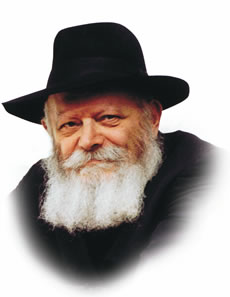
DEDICATED IN HONOR OF THE LUBAVITCHER REBBE
מוקדש לזכות כ”ק אדמו”ר נשיא דורנו מליובאוויטש

IN HONOR OF
The Soldiers of Tzivos Hashem Chaim and Aiden Oded שיחיו Morris
DEDICATED BY THEIR PARENTS
Rabbi & Mrs. Menachem M. and Chaya Mushka שיחיו Morris

לזכות
חיילי “צבאות השם” חיים ועדן עודד שיחיו מאריס
נדפס ע”י הוריהם
הרה”ת ר’ מנחם מענדל וזוגתו מרת חי’ מושקא שיחיו מאריס

DEDICATED BY MR. RAZIEL שיחי’ GATES


[1]. Parshas Beshalach, Shemos 15:22.

[2]. See the Midrash Tanchumah Parshas Naso Chapter 16. See also Tanya at the beginning of Chapter 36.

[3]. See Tikkunei Zohar Chapter 469 (Pages 112, a and 114, a).
Pearls of Rashi: Parshas Tzav II

Click here for a printable version.

This week’s Torah portion is Tzav. It is a continuation of last week’s Parshah. It begins with the laws of the burnt offering. Hashem tells Moshe to[1] “command Aharon and his sons, saying, ‘This is the law of the burnt offering. That is the burnt offering which burns on the altar all night until morning etc.’” Rashi cites the words from the verse, “this is the law of the burnt offering.” He explains that “this passage comes to teach us that of the fats and parts the burning of an animal is valid throughout the entire night[2].” The Talmud teaches us[3] that the primary time for burning fats is during the day. However, they may be burnt at night as well.

Everything in Torah teaches us a practical lesson in serving Hashem. What lesson can we learn from the above?

“The main time for burning the fats is during the day.” The word day signifies light and revelation, as the Torah says,[4] “And Hashem called the light day …” This refers to the service of Torah and Mitzvos, through which one brings Divine light into the world. The fact is that that “they may be burnt at night as well.” Night represents darkness, i.e., the concealment of G-dliness. This refers to one being occupied with mundane matters, such as conducting business or the like. These are things that are permissible according to Torah law. Nevertheless, they conceal our true purpose in this world.

The meaning of burning the fats (which symbolize pleasure) during the day is burning the personal pleasure we derive from our service of Hashem. Our only purpose for serving G-d should be order to fulfill His will[5].

Burning the fats at night, however, alludes to burning the pleasure we derive from worldly matters. All such things must be performed for the sake of heaven; one must be occupied in providing his children with a “Torah true” education, giving Tzedokoh, etc.

As quoted earlier from the Talmud, the only time for burning fats is during the daytime. We must perform mundane acts for Hashem’s sake. However, it is of greater importance that we must strive to study Torah and perform Mitzvos to serve Hashem.

I wish one and all wonderful Shabbos and a happy and Kosher Pesach!

Rabbi Shmuel Mendelsohn

Adapted from Likkutei Sichos Volume 3, Page 950


DEDICATED IN HONOR OF THE LUBAVITCHER REBBE
מוקדש לזכות כ”ק אדמו”ר נשיא דורנו מליובאוויטש

IN HONOR OF
The Soldiers of Tzivos Hashem Chaim and Aiden Oded שיחיו Morris
DEDICATED BY THEIR PARENTS
Rabbi & Mrs. Menachem M. and Chaya Mushka שיחיו Morris

לזכות
חיילי “צבאות השם” חיים ועדן עודד שיחיו מאריס
נדפס ע”י הוריהם
הרה”ת ר’ מנחם מענדל וזוגתו מרת חי’ מושקא שיחיו מאריס

DEDICATED BY MR. RAZIEL שיחי’ GATES


[1]. Our Parshah, Vayikroh 6:2.

[2]. The various parts of the animal may continue burning on the altar throughout the night, following the day on which it was brought.

[3]. See Tractate Menochos 72.

[4]. Parshas Bereishis, Bereishis 1:5.

[5]. Please note, that serving Hashem even for personal reasons is perfectly acceptable. What is written in the text is our goal.

Pearls of Rashi: Parshas Tzav

Click here for a printable version.

This week’s Parshah, Tzav, continues where last week’s left off. It discusses sacrifices brought in the Mishkan, the Holy Temple, and those which will be brought in the Third Temple.

One of the offerings our Torah Portion discusses is a Thanksgiving Offering. The Torah tells us that[1] “If he is bringing it as a thanksgiving offering …”

Rashi quotes the words “If he is bringing it as a thanksgiving-offering, and explains “if (he is bringing it) to give thanks (to Hashem) for a miracle that had happened to him. For example, those who made a sea-voyage, journeyed in the desert, had been imprisoned, or a sick person who recovered.”

Rashi is telling us four events for which one must bring this offering, thereby giving thanks to Hashem; one who survives a sea-voyage, a journey in the desert, prison, or sickness. Rashi is very precise. We need to understand why Rashi lists these four occurrences in this particular order.

All four of these happened to the Jews throughout their forty years in the wilderness. Each took place in the order in which Rashi listed them.

Our ancestors began their forty-year trek through the desert by making a “sea-voyage,” i.e., traveling through the Red Sea. This started their “journey through the desert.” After this journey began, Hashem decreed that we would remain in the desert for forty years. We were locked in “prison.” It was only after traversing the desert forty years that it was clear that not one of the Jews became a “sick person.” 

Each one of us experiences the many journeys of the Jewish Nation throughout our lifetimes. Hashem is constantly guarding us, protecting us from all of the pitfalls surrounding us. Hashem should give us the insight to recognize His providence and to thank Him for each moment. These moments are all bringing us closer to entering the “Promised Land” with the coming of Moshiach Now.

I wish one and all a good Shabbos and a Kosher and Happy Pesach!

Rabbi Shmuel Mendelsohn

Adapted from Likkutei Sichos Volume 12, Page20   


DEDICATED IN HONOR OF THE LUBAVITCHER REBBE
מוקדש לזכות כ”ק אדמו”ר נשיא דורנו מליובאוויטש

IN HONOR OF
The Soldiers of Tzivos Hashem Chaim and Aiden Oded שיחיו Morris
DEDICATED BY THEIR PARENTS
Rabbi & Mrs. Menachem M. and Chaya Mushka שיחיו Morris

לזכות
חיילי “צבאות השם” חיים ועדן עודד שיחיו מאריס
נדפס ע”י הוריהם
הרה”ת ר’ מנחם מענדל וזוגתו מרת חי’ מושקא שיחיו מאריס

DEDICATED BY MR. RAZIEL שיחי’ GATES


[1]. Our Parshah, Vayikroh 7:12.

Pearls of Rashi: Parshas Vayikroh

Click here for a printable version.

This week we begin studying and reading Vayikroh, the third book of the Torah. It teaches us of the many sacrifices and offerings which we would bring in the Sanctuary.

After telling us that Hashem called to Moshe, the Torah tells us that He told Moshe[1] to “Speak to the Jewish Nation and say to them, ‘When a man from among you brings a sacrifice to the Lord; from animals, from cattle or the flock you shall bring your sacrifice.'” Rashi cites the words “when a man from among you brings a sacrifice” and explains that “voluntary sacrifices is the concept which is under discussion.” In other words, Rashi makes it clear that the Torah begins teaching the laws of voluntary offerings.

Why does the Torah start by teaching us the rules of one who donates a sacrifice? It would seem more appropriate to begin with the law of an obligatory sacrifice.

The main point of an offering is not the sacrifice itself. It is neither the animal nor the grain and wine brought together with the animal. Instead, it is the intent and thought which goes into the offering. We know this from the words of the Sages[2]. “Whether one gives much or little (it is equally pleasing to Hashem), provided that he directs his heart to Heaven.” The same is true of mandatory sacrifices, which serve to atone for sin. The atonement occurs due to the thought that goes into the offering, not the actual animal and that which accompanies it.

The root of the Hebrew word for a sacrifice, “Korbon – קרבן,” is related to the word “Kiruv – קירוב,” which means drawing close. The idea of a sacrifice is to bring one’s abilities and senses closer to Hashem[3].

To teach us this all-important factor, the Torah begins the laws of sacrifices by telling us of free-will offerings. It describes offerings which one brings from the generosity of his heart. It does so to let us know that the heart is the introduction to all of the sacrifices.

Because each Jew has a Divine soul which is a veritable part of Hashem[4], he wants to come closer (Korbon – קרבן) to G-d from the depths of his soul.

I wish one and all a good Shabbos and a Kosher and Happy Pesach!

Rabbi Shmuel Mendelsohn

Adapted from Likkutei Sichos Volume 17, Pages 9-16   


DEDICATED IN HONOR OF THE LUBAVITCHER REBBE
מוקדש לזכות כ”ק אדמו”ר נשיא דורנו מליובאוויטש

IN HONOR OF
The Soldiers of Tzivos Hashem Chaim and Aiden Oded שיחיו Morris
DEDICATED BY THEIR PARENTS
Rabbi & Mrs. Menachem M. and Chaya Mushka שיחיו Morris

לזכות
חיילי “צבאות השם” חיים ועדן עודד שיחיו מאריס
נדפס ע”י הוריהם
הרה”ת ר’ מנחם מענדל וזוגתו מרת חי’ מושקא שיחיו מאריס

DEDICATED BY MR. RAZIEL שיחי’ GATES


[1]. Our Parshah, Vayikroh 1:2.

[2]. See the end of Talmud Menochos. See also Rashi’s comments to our Parshah, Vayikroh 1:17 and 2:1. 

[3]. See Sefer Habahir, Chapter 46. See also Zohar Section III, Page 5, a. This is also found in Sheloh Tractate Taanis, Page 211, Side b, and in Pri Eitz Chaim, The Gate of Tefillah Chapter 5.

[4]. See Tanya, the beginning of Chapter 2.

Pearls of Rashi: Parshas Vayakhel-Pekudei II

Click here for a printable version.

At the end of this week’s Torah portion, Vayakhel-Pekudei, we complete the Torah’s second book, Shemos. Our Parshah ends with the words,[1] “For the cloud of Hashem was upon the Mishkan by day, and there was fire within it at night. This was before the eyes of the entire house of Israel in all their journeys.” Rashi cites the words “before the eyes of the entire house of Israel in all their journeys.” He explains that “Since from the place of their encampment they resumed their journeys, they are all called journeys.” In other words, he is saying that the encampments are a part of the journey.

The beginning and the end of something are always closely connected. This is true of the opening and conclusion of the book of Shemos. The book begins with us being on the lowest possible level. We were slaves to Pharaoh in Egypt.

As the story progresses, the Jewish Nation reaches the most incredible heights. We draw G-dliness into this world through our miraculous exodus from Egypt, receiving the Torah directly from Hashem at Mount Sinai, and building the Tabernacle, Hashem’s resting place in this world. What connection could there possibly be between our humble beginning and our glory at the end of Shemos?

This book’s conclusion emphasizes that the significant elevation we experienced began while we were still slaves in Egypt. That marked the beginning of our redemption. Rashi is telling us here that our camping in Egypt was also a journey; we were going onward and upward. This brought us a step closer to our redemption from Egypt and our ultimate deliverance from our present Gallus.

At times it may seem that we are far from reaching our goal. However, as we continue to strive, we will surely achieve the purpose of Moshiach now!

I wish one and all a good Shabbos and a Kosher and Happy Pesach!

Rabbi Shmuel Mendelsohn

Adapted from Likkutei Sichos Volume 6, Page 238


DEDICATED IN HONOR OF THE LUBAVITCHER REBBE
מוקדש לזכות כ”ק אדמו”ר נשיא דורנו מליובאוויטש

IN HONOR OF
The Soldiers of Tzivos Hashem Chaim and Aiden Oded שיחיו Morris
DEDICATED BY THEIR PARENTS
Rabbi & Mrs. Menachem M. and Chaya Mushka שיחיו Morris

לזכות
חיילי “צבאות השם” חיים ועדן עודד שיחיו מאריס
נדפס ע”י הוריהם
הרה”ת ר’ מנחם מענדל וזוגתו מרת חי’ מושקא שיחיו מאריס

DEDICATED BY MR. RAZIEL שיחי’ GATES


[1]. Our Parshah, Shemos 40:38.

Pearls of Rashi: Parshas Vayakhel-Pekudei I

Click here for a printable version.

In this week’s Torah portion, Vayakhel-Pekudei, the Torah audits the Jews’ donations to build the Tabernacle. The Torah tells us that[1] “these are the numbers of the Mishkan, the Mishkan of the Testimony, which was counted at Moshe’s command…” The seemingly redundant use of the word “Mishkan seems to bother Rashi. He comments that the Torah writes the word Mishkan (משכן ) twice. The double-expression alludes to the Temple, which was taken as security (מַשְׁכּוֹן ) by the two destructions, for Israel’s sins.” Rashi is pointing out that the Hebrew word Mishkan (Tabernacle) is related to the word Mashkon (security).

What is the meaning of security? A security is that which the lender holds for a fixed amount of time. However, it remains intact. We will behold the building of the third Bais Hamikdosh. At that time, Hashem will restore to us both the first and second Temples with all of their grandeur.

What is the significance of the words “Mishkan of the Testimony?” Whatever occurs during the time of Moshiach will be the direct result of our behavior now, during the time of exile.

            Hashem calls us His witnesses[2], “You are My witnesses.” The Jews testify to, reveal, and tell the world of Hashem’s presence. We are following in the footsteps of our forefather Avrohom3, who called out (and caused others to call out) in the name of Hashem.

So too, during our current exile we are building the “Mishkan of Testimony.” Through our present actions, we are making the Third Bais Hamikdosh. Our Sages describe this as4 “Testimony to all of the inhabitants of the earth that G-d’s presence rests in the world. May we merit to see this soon with our own eyes.

I wish one and all a good Shabbos and a Kosher Pesach!

Rabbi Shmuel Mendelsohn Adapted from Hisva’adus Shabbos Kodesh Parshas Vayakhel-Pekudei 5747, Page 673


DEDICATED IN HONOR OF THE LUBAVITCHER REBBE
מוקדש לזכות כ”ק אדמו”ר נשיא דורנו מליובאוויטש

IN HONOR OF
The Soldiers of Tzivos Hashem Chaim and Aiden Oded שיחיו Morris
DEDICATED BY THEIR PARENTS
Rabbi & Mrs. Menachem M. and Chaya Mushka שיחיו Morris

לזכות
חיילי “צבאות השם” חיים ועדן עודד שיחיו מאריס
נדפס ע”י הוריהם
הרה”ת ר’ מנחם מענדל וזוגתו מרת חי’ מושקא שיחיו מאריס

DEDICATED BY MR. RAZIEL שיחי’ GATES


[1]. Our Parshah, Shemos 38:21.

[2]. Yeshaya 43:10.

Pearls of Rashi: Parshas Ki Siso

Click here for a printable version.

In this week’s Torah portion, Ki Siso, Moshe prays that Hashem forgive the Jewish people. G-d tells him that[1] “I will let all My goodness pass before you; I will proclaim the name of the Lord before you, and I will favor those whom I wish to favor …”

Rashi explains that[2] “The time has come that you will see some of My glory that I will permit you to see because I want and I need to teach you the order of prayer ... I will (therefore) let all the attributes of My goodness pass before you while you are hidden in a cave. I will proclaim the name of the Lord before youto teach you the procedure of begging for compassion (i.e., praying). According to this procedure, (during) which you (will) see Me enwrapped (in a Tallis) and proclaiming the Thirteen Attributes (of Mercy), teach the Jews to do likewise.”

Following this, Hashem says that[3] “Then I will remove My hand, and you will see My back, but My face shall not be seen.” Rashi cites the words that “You will see my back” and explains that Hashem “showed him the knot of (His) Tefillin.” What is the significance of Hashem showing Moshe His Tallis and the knot of His Tefillin?

It is the nature of every Jew to believe that[4] “In the beginning, Hashem created the heaven and the earth.” Furthermore, it is inherent of every Jew to believe that G-d is creating the world every moment. This being the case, how is it possible for a Jew to ever sin? The answer is that it is only possible if this “slips his mind” temporarily. 

What does that have to do with a Tallis and Tzitzis – Fringes[5]? The answer is that both help us remember all of Hashem’s commandments. Regarding Tzitzis, it says,[6] “and when you see it, you will remember all of the commandments of the Lord to perform them.” Furthermore, it says,[7] “So that you remember and perform all of my commandments.”

Regarding Tefillin, it says,[8] “It shall be to you as a sign upon your hand and as a remembrance between your eyes.” Once the Tallis and the Tefillin remove the sin’s cause, the forgetfulness, they also remove the wrongs, and Hashem forgives the Jewish Nation.

Let us pray that Hashem forgives our sins and brings the Redemption now!

I wish one and all a good Shabbos and a Kosher Pesach!

Rabbi Shmuel Mendelsohn


DEDICATED IN HONOR OF THE LUBAVITCHER REBBE
מוקדש לזכות כ”ק אדמו”ר נשיא דורנו מליובאוויטש

IN HONOR OF
The Soldiers of Tzivos Hashem Chaim and Aiden Oded שיחיו Morris
DEDICATED BY THEIR PARENTS
Rabbi & Mrs. Menachem M. and Chaya Mushka שיחיו Morris

לזכות
חיילי “צבאות השם” חיים ועדן עודד שיחיו מאריס
נדפס ע”י הוריהם
הרה”ת ר’ מנחם מענדל וזוגתו מרת חי’ מושקא שיחיו מאריס

DEDICATED BY MR. RAZIEL שיחי’ GATES


[1]. Our Parshah, Shemos 33:19.

[2]. See Rashi’s comments to Our Parshah, Shemos 33:19.

[3]. Our Parshah, Shemos 33:23.

[4]. Parshah Bereishis, Bereishis 1:1.

[5]. Parshas Shelach, Bamidbar 15:37 – 41.

[6]. Ibid, Bamidbar 15:39.

[7]. Ibid, Bamidbar 15:40.

[8]. Parshas Bo, Shemos 13:9.

The Rashi of the Week: Parshas Ki Siso & Poroh

Click here for a printable version.

Leading up to Pesach, we read four special additional Torah Portions. This week we read Parshas Poroh, which tells us of the Red Heifer, which was a part of a process used to purify one who became defiled by contact with a corpse.

The portion begins by telling us that[1] “This is the statute (Chok) of the Torah which Hashem commanded saying, ‘Speak to the Jewish people and have them take for you a perfectly red unblemished cow, upon which no yoke was laid.’” A “Chok,” translated as a statute, is a Divine commandment that human understanding cannot grasp. We can only understand this with G-dly intellect. The law of the “Red Cow” is the statute of the Torah. It is the most outstanding of all “Chukim” (plural of “Chok”). Through this procedure, one who came into contact with a corpse can become ritually purified.

There are various levels of spiritual impurity. Each is the result of contact with death in one form or another. Hence the most severe state of spiritual impurity is contact with an actual corpse. The only way to remove this defilement is through the “Red Cow.”

Rashi comments on the above verse, citing the words “and have them take for you.” He writes that “We will always call this by your name; the cow which Moshe prepared in the desert.” We have written many times that Rashi is very particular with the words he uses. He only writes that which is necessary. What need is there to tell us that Moshe prepared the cow “in the desert?” We all know that whatever Moshe did after the departure was done in the desert! He received the Torah and fulfilled all of Hashem’s commandments in the wilderness!

As is the case with everything in Torah, this comes to teach us an important lesson. One can ask how it is possible to purify a Jew who has descended to the lowest level and finds himself in an unclean environment. The answer is that he must keep in mind that Moshe prepared the “Red Cow” in the desert, which was a place of[2] “…snakes, vipers, scorpions, and drought, where there was no water …” Nevertheless, it was from this cow specifically that we prepared all subsequent cows. Rashi writes that each cow is called by Moshe’s name. With Moshe’s power, the leader of the generation, we can purify every Jew. This is true regardless of how far he has fallen and whatever his surroundings are. 

We must use that power to sanctify ourselves and all of those around us. This way, we will indeed bring Moshiach now!

I wish one and all a good Shabbos and healthy summer!

Rabbi Shmuel Mendelsohn

Adapted from Likkutei Sichos Volume 4, Page 1061


DEDICATED IN HONOR OF THE LUBAVITCHER REBBE
מוקדש לזכות כ”ק אדמו”ר נשיא דורנו מליובאוויטש

IN HONOR OF
The Soldiers of Tzivos Hashem Chaim and Aiden Oded שיחיו Morris
DEDICATED BY THEIR PARENTS
Rabbi & Mrs. Menachem M. and Chaya Mushka שיחיו Morris

לזכות
חיילי “צבאות השם” חיים ועדן עודד שיחיו מאריס
נדפס ע”י הוריהם
הרה”ת ר’ מנחם מענדל וזוגתו מרת חי’ מושקא שיחיו מאריס

DEDICATED BY MR. RAZIEL שיחי’ GATES


[1]. Our Parshah, Bamidbar 19:2.

[2]. Parshas Aikev, Devorim 8:15.

Pearls of Rashi: Parshas Tetzaveh I

Click here for a printable version.

In this week’s Torah portion, Tetzaveh the Torah describes the eight garments the High Priest was required to wear while serving in the Temple. The Torah tells us of his breastplate, the Choshen Mishpat[1], and says that[2] “You shall place the Urim V’Tumim into the Choshen Mishpat so that they will be over Aharon’s heart when he comes before Hashem.”

Rashi cites the words “the Urim and the Tumim” and explains, “This is the explicit name (of Hashem) which he, (Moshe), would place within the folds of the Choshen. Through this, it would light up its words (Urim is from the Hebrew word Ohr, which means light) and perfect (Tumim is from the Hebrew word Tam, which means complete, or perfect) its words. There was also a Choshen in the Second Temple because the High Priest couldn’t be missing (any of his eight) garments. However, the (explicit) name (of Hashem) was not inside it. Because of that inscription (of the explicit name of Hashem), it was called ‘judgment,’ as it says ‘And he shall ask for him through the judgment of the Urim.’”

The Second Temple lacked five spiritual revelations, which were present in the first. Nonetheless, the same level of G-dliness permeated both of them. In the First Temple, the G-dly light reached outside the Temple, while in the second, it remained within the Temple. 

This helps us to understand the difference between the Choshen in the First and Second Temple. In the First Bais Hamikdosh, the holiness of the Choshen reached the outside world. This allowed it to make decisions on how to tackle the world outside of the Temple. In the Second Temple, this was not the case.

The same is true during the time of exile. The Hebrew word Choshen – חשן contains the same letters as the Hebrew word for serpent – נחש – Nachash, referring to the primordial snake, the evil inclination. At the same time, the numeric equivalent of the phrase נחש is the same as the numeric equivalent of the word משיח – the Messiah, representing redemption; the time when G-dliness will shine throughout the world. Our sins brought about our exile. As a result of this, the Choshen was concealed, and the serpent was revealed. However, our service with Torah and Mitzvos will hide the serpent. Consequently, it will display the presence of the Choshen, Moshiach, and G-d throughout the world.

I wish one and all a good Shabbos and a happy Purim!

Rabbi Shmuel Mendelsohn

Adapted from Likkutei Sichos 11, Page 133ff.


DEDICATED IN HONOR OF THE LUBAVITCHER REBBE
מוקדש לזכות כ”ק אדמו”ר נשיא דורנו מליובאוויטש

IN HONOR OF
The Soldiers of Tzivos Hashem Chaim and Aiden Oded שיחיו Morris
DEDICATED BY THEIR PARENTS
Rabbi & Mrs. Menachem M. and Chaya Mushka שיחיו Morris

לזכות
חיילי “צבאות השם” חיים ועדן עודד שיחיו מאריס
נדפס ע”י הוריהם
הרה”ת ר’ מנחם מענדל וזוגתו מרת חי’ מושקא שיחיו מאריס

DEDICATED BY MR. RAZIEL שיחי’ GATES


[1]. Click here for more information about the High Priest’s breast plate.

[2]. Our Parshah, Shemos 28:30.

Pearls of Rashi: Parshas Terumah

Click here for a printable version.

In this week’s Torah portion, Terumah, Hashem commands us to build the Mishkan and all of its vessels. Regarding the Menorah’s construction, the Torah writes[1], “And you shall make a Menorah of pure gold. The Menorah shall be made of hammered work; its base and its stem, its goblets, its knobs, and its flowers shall be (one piece) with it.

Rashi cites the words “the Menorah shall be made” (in the passive voice) and explains that the Menorah shall be made “by itself. Since Moshe found difficulty with it (making the Menorah), Hashem said to him, ‘Cast the talent (approximately sixty-four pounds of gold) into the fire, and it will be made by itself.’ Therefore, the Torah does not say ‘you shall make it,’ but rather ‘it shall be made.’”

There were numerous vessels in the Tabernacle. Many of them had detailed complicated forms. Why did Moshe Rabbeinu specifically find the Menorah difficult?

The Menorah served to illuminate the world’s darkness. Our Sages declare that the Menorah[2] “is testimony to the entire world that the Shechinah rests in Israel.” Hence Moshe could not understand how a physical candelabra can illuminate the physical world!

Hashem explained to him that it is true that a human being cannot construct such a Menorah. Therefore, Hashem told him to throw the gold into the fire, and I, Hashem, will make it.

Hashem tells each of us that He is not satisfied merely with our spiritual gifts, i.e., davening, learning, and the like. He demands that we use our physical possessions to make Him a sanctuary. However, we must remember that we cannot do this by ourselves. We must cast our possessions into the G-dly fire in our souls, our love of G-d, and He will do the rest.

I wish one and all a good Shabbos!

Rabbi Shmuel Mendelsohn

Adapted from Likkutei Sichos 1, Page 174ff.


DEDICATED IN HONOR OF THE LUBAVITCHER REBBE
מוקדש לזכות כ”ק אדמו”ר נשיא דורנו מליובאוויטש

DEDICATED IN LOVING MEMORY OF Mrs. Chana (Ann) bas Reb Shmuel ע “ה Mendelsohn
Passed away on 7 Adar II, 5752 May Her Soul be bound in the Eternal Bond of Life

IN HONOR OF
The Soldiers of Tzivos Hashem Chaim and Aiden Oded שיחיו Morris
DEDICATED BY THEIR PARENTS
Rabbi & Mrs. Menachem M. and Chaya Mushka שיחיו Morris

לזכות
חיילי “צבאות השם” חיים ועדן עודד שיחיו מאריס
נדפס ע”י הוריהם
הרה”ת ר’ מנחם מענדל וזוגתו מרת חי’ מושקא שיחיו מאריס


[1]. Our Parshah, Shemos 25:31.

[2]. Talmud Shabbos Page 22.